

Wiki
Browse your brand's compiled knowledge base, with evidence-backed claims and links between related entities.
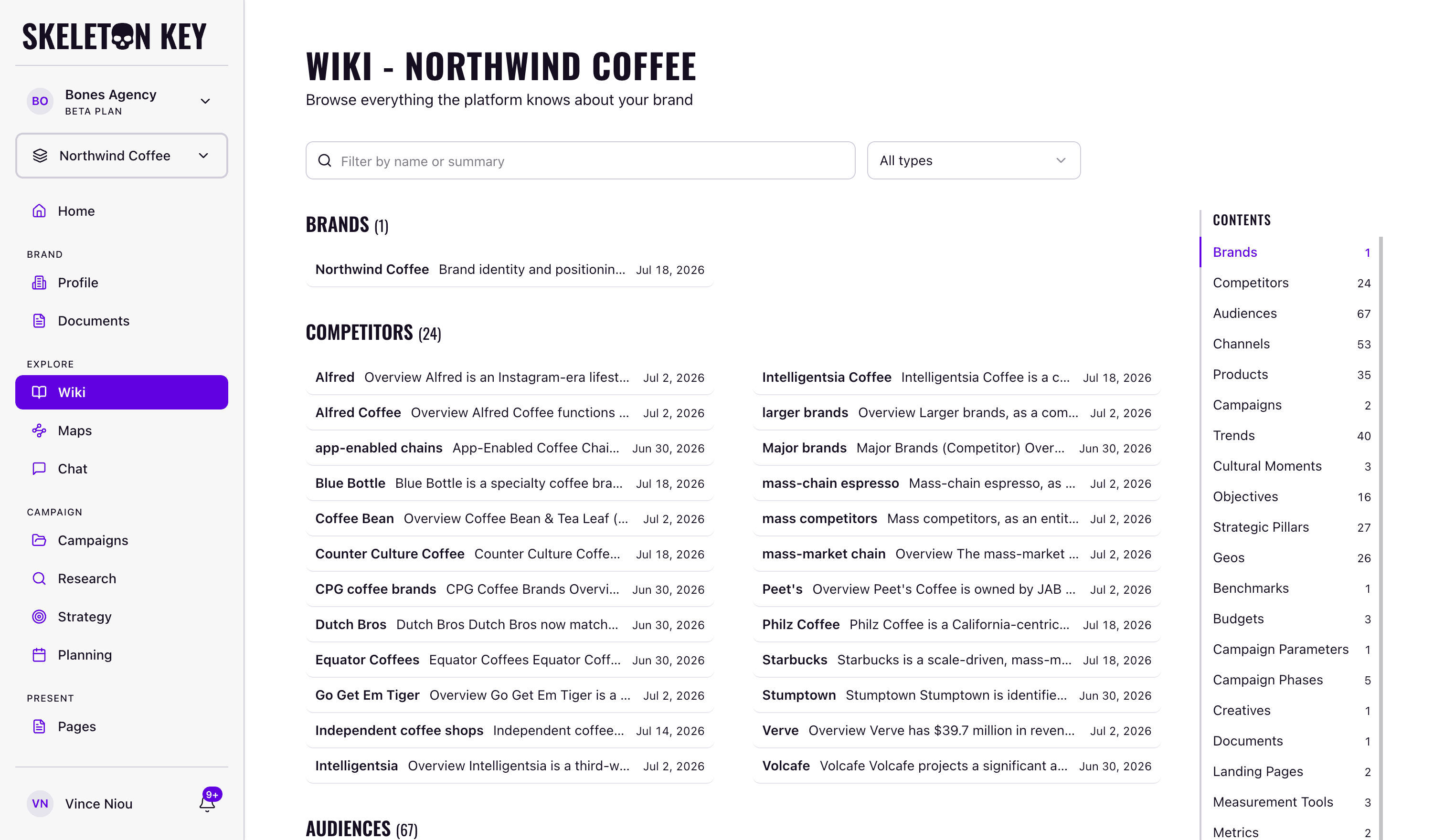
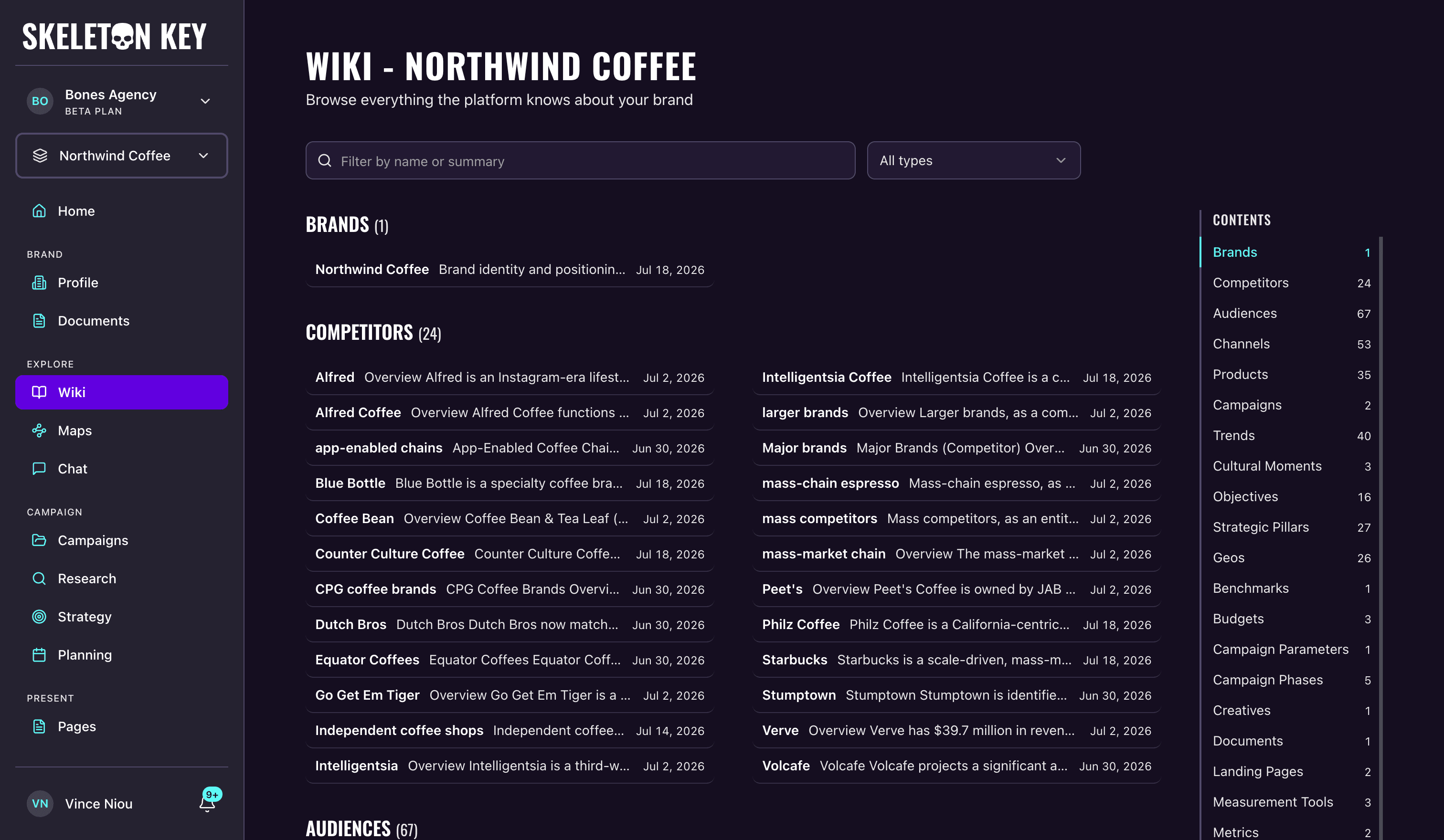
The Wiki is a browsable directory of everything Skeleton Key knows about your brand: competitors, audiences, channels, products, campaigns, trends, objectives, strategic pillars, and the brand itself. The longer you work in Skeleton Key, the more the Wiki knows. It is the reference your work writes for itself.
What it does
Skeleton Key compiles Wiki pages from your Brand Profile, campaign briefs, generated Research, Strategy, and Media Plan outputs, and uploaded documents. Each page combines a readable summary with inline citations, the claims behind those citations, and links to related entities.
Sources
Your inputs and every generated output
Evidence claims
Individual findings, each keeping its source and quote
Entity pages
Readable articles written from those claims
Connections
Links between related entities across the brand
Every sentence in a Wiki page traces back to a claim, and every claim keeps the source it came from, with the original quote where one is available. That makes the Wiki auditable in a way an AI-written summary on its own is not. When a page says your Gen Z audience over-indexes on short-form video, you can open the evidence, see which research output said so, and read the exact words it used.
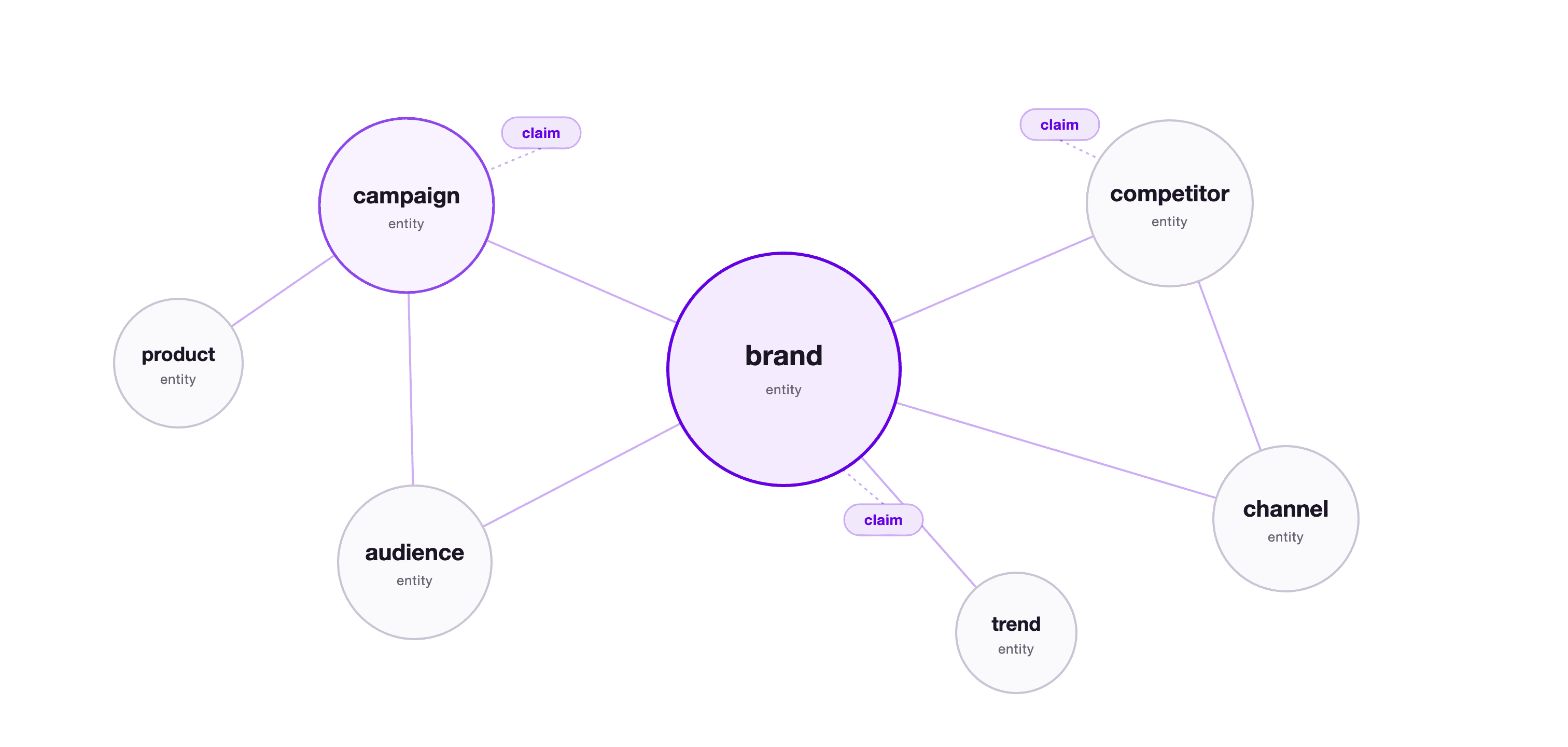
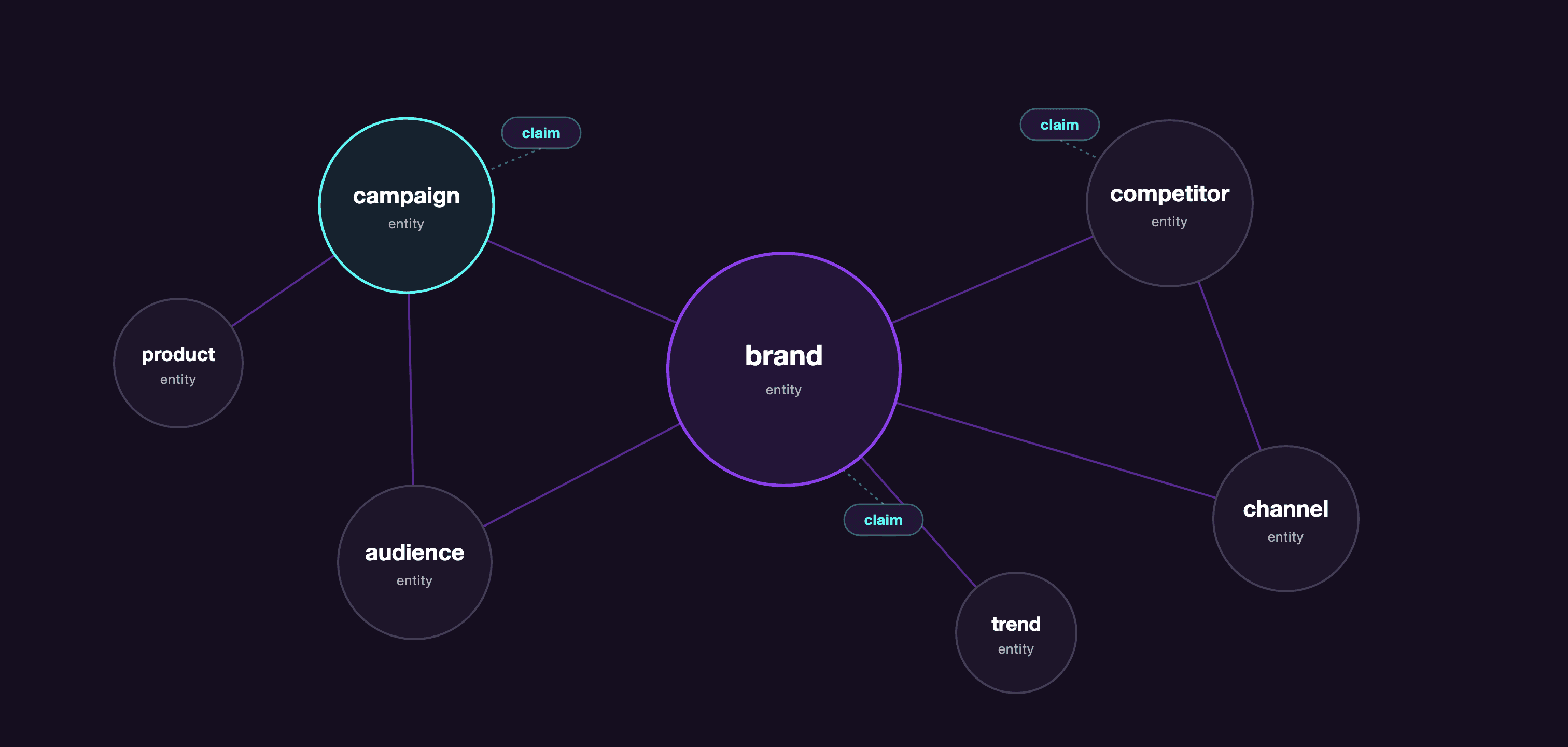
The Wiki also keeps general brand knowledge apart from campaign findings. Evidence on a page is grouped by where each claim applies: General for claims that describe the brand as a whole, or the campaign's name for findings that came out of one campaign's work. A durable fact about your category and a hypothesis from last quarter's holiday push both have a place, and you can always tell which is which.
| What you might wonder | How the Wiki holds it |
|---|---|
| Where does a finding live? | Every claim has one home page. Other pages that need it reference it there. |
| How do entities relate? | Pages link to the competitors, audiences, channels, and products they share claims with. |
| Which campaign said this? | Evidence is grouped by scope: General for brand-wide knowledge, or the name of the campaign it came from. |
New source material queues the affected pages for an update. The directory grows as you generate more work and upload more documents, with no extra effort on your part.
Where to find it
Click Wiki under Explore in the sidebar. The page lives at /wiki and always shows the directory for the brand selected in the sidebar.
How it works
The directory groups pages by entity type. Use the search field to filter by name or summary, or open All types to show only the types you need. Each row shows the entity name, a short summary, and the date its page was generated.
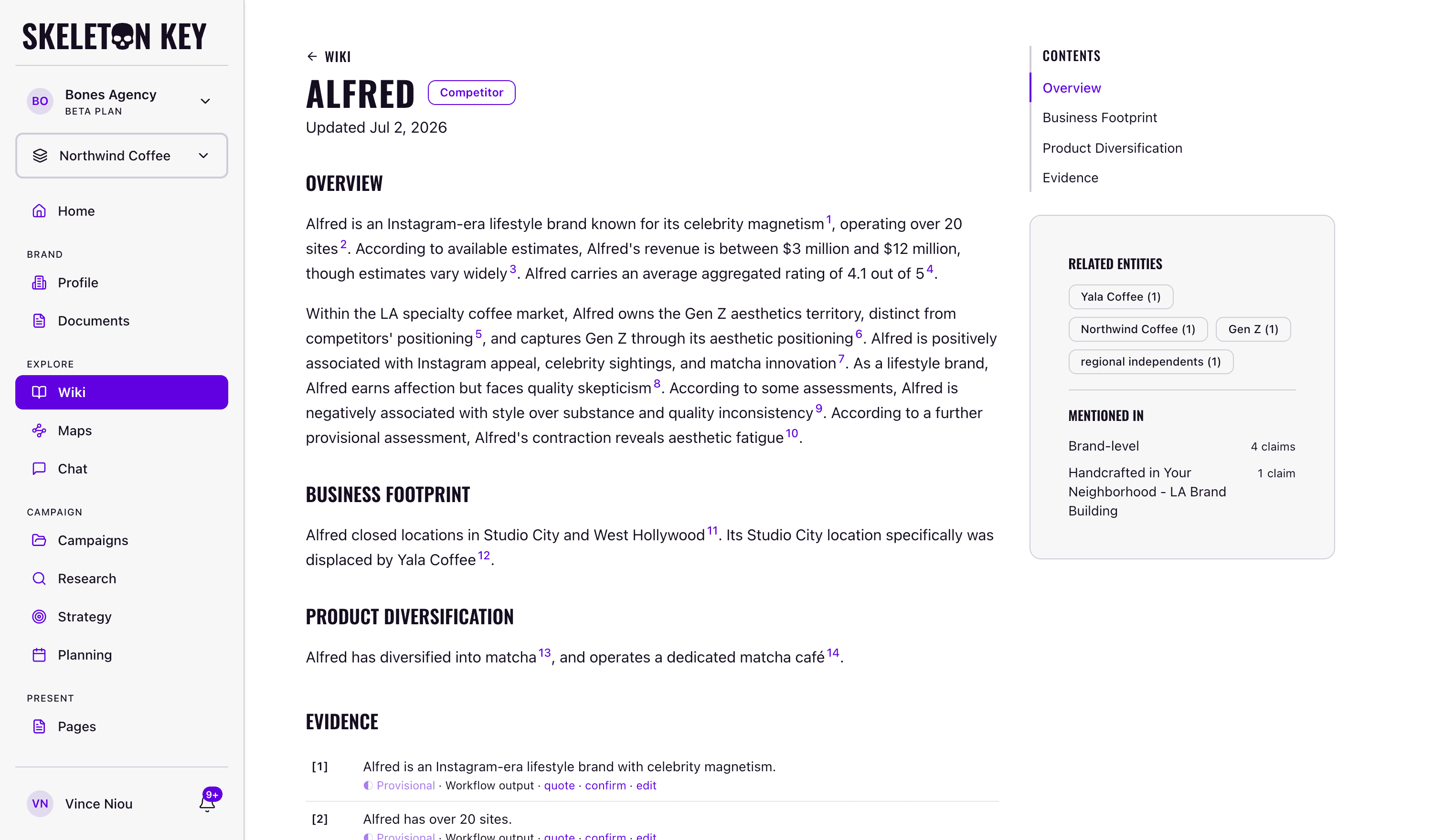
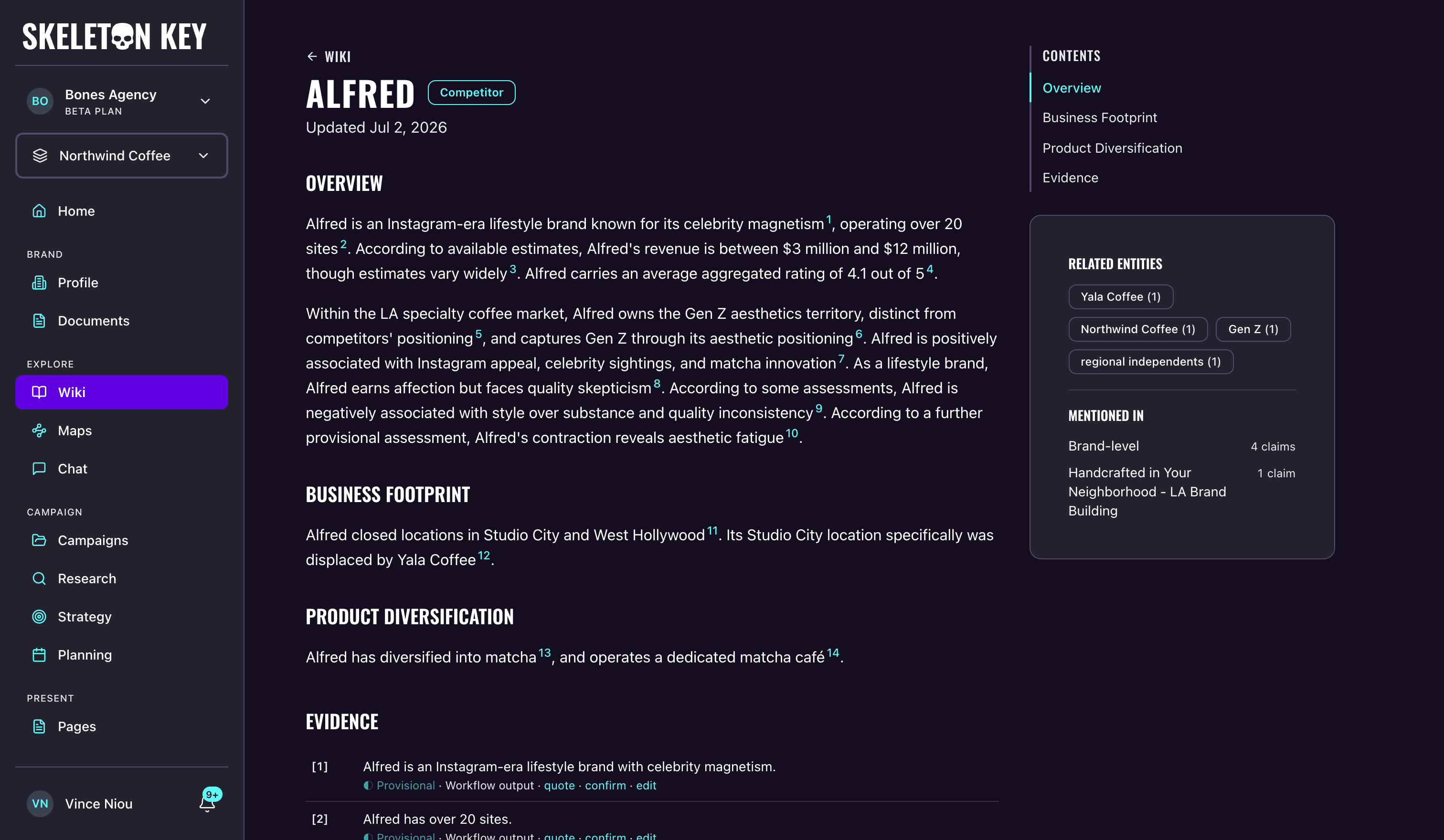
Open an entity to read its page. Citation numbers in the article preview the supporting claim and jump to its row in the Evidence section. Each evidence row identifies its status, scope, and source, with the original quote when one is available. The connections panel links to related entities and shows which campaigns or brand-level claims mention the entity.
What you can adjust
Search and type filters stay in the page URL, so browser back and forward navigation restores them. Clear the filters to return to the full directory.
If you have edit access to the brand, you can also curate the evidence itself: confirm a provisional claim, undo a confirmation, edit a claim's text, or restore its original wording. Confirmations and edits become part of the record, so the Wiki reflects your judgment about what is settled, not just what the agents produced. A claim change queues the page to refresh.
Limits and considerations
- A Brand Profile is required. Without one, Wiki asks you to complete the profile first.
- The Wiki doesn't create new findings. It compiles what your generated outputs, campaign details, and documents already say. It never searches the web or runs a workflow of its own. To change what the Wiki knows, generate or upload more, and the affected pages catch up.
- Updates are not instant. A page can briefly show its earlier version while new findings are queued. The page header shows its generated date, and editors see a refresh notice while an update is pending.
- Directory search is focused. It matches entity names and summaries, not every sentence in an entity page.
- Entity pages can change address. If two entities merge or an entity is removed during a refresh, an older link can lead to a page-not-found message.
Last updated: 2026-07-23