

Culture Analyst
Maps societal values, cultural shifts, and cultural moments relevant to your category and brand.
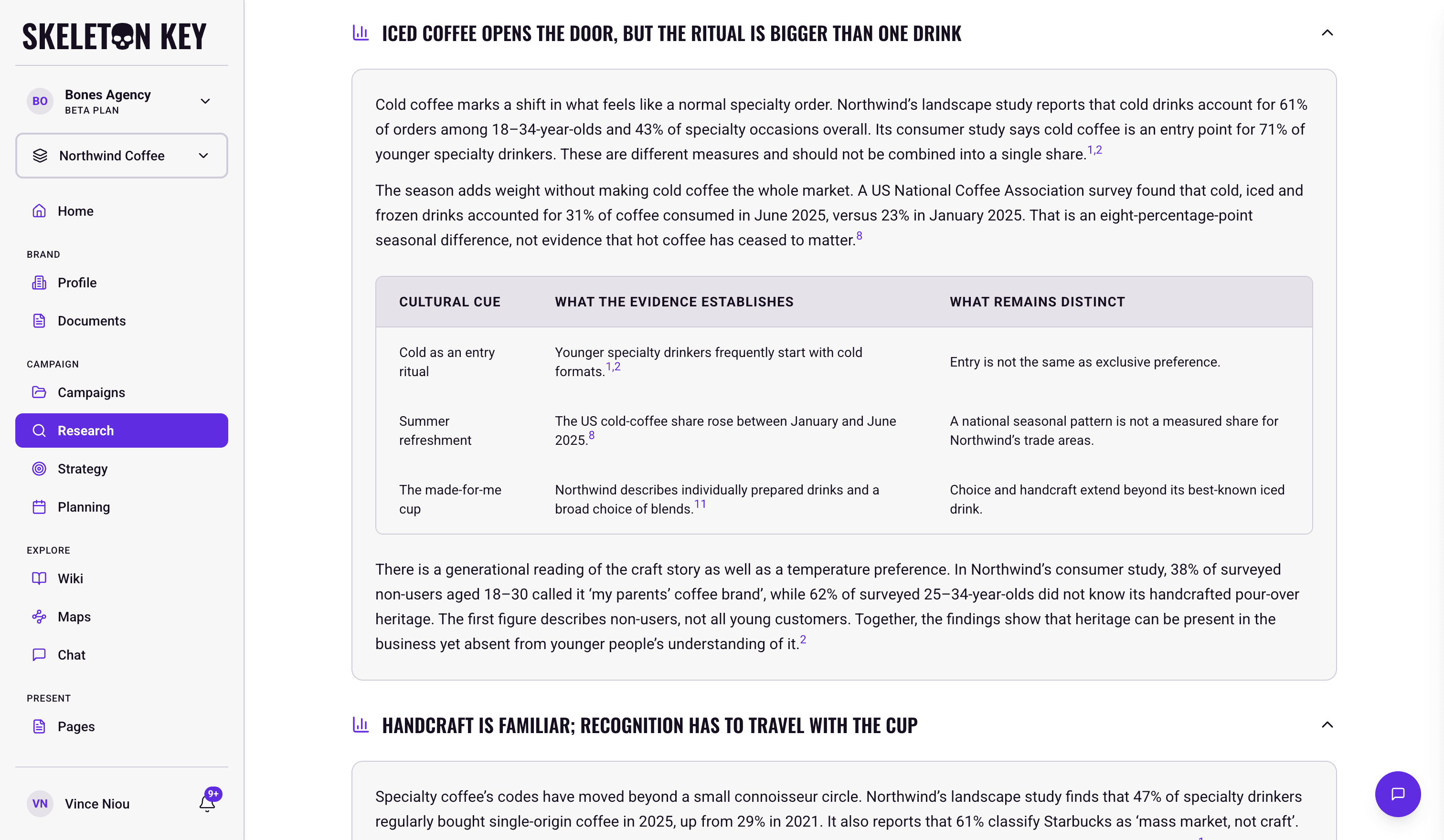
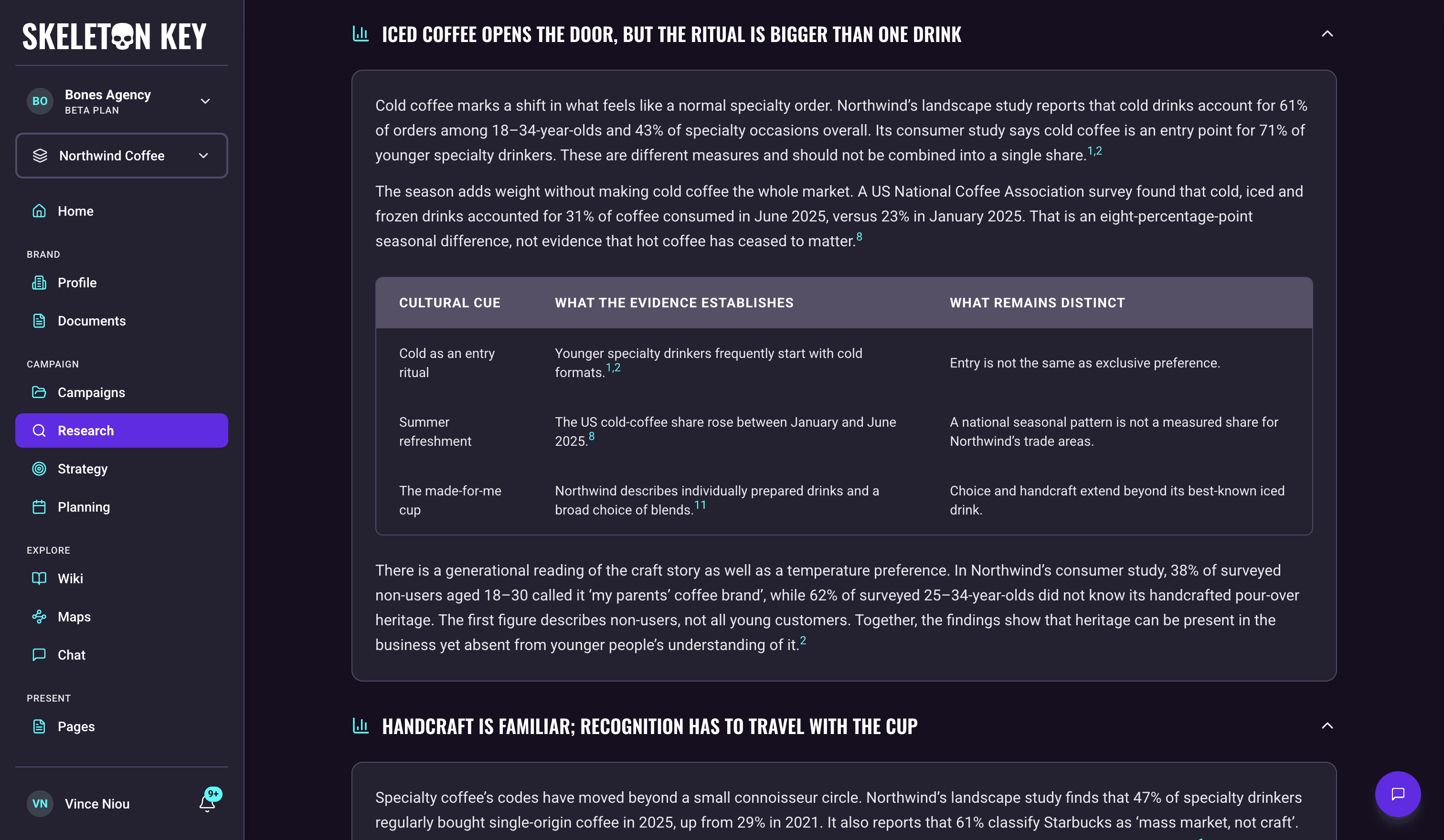
The Culture Analyst is one of the five Research analysts. It covers the societal context around your category: the values at play, the shifts underway, and the cultural moments that matter for your brand. Where the Category Analyst maps market structure, the Culture Analyst gives it texture.
What it does
The analyst answers one question: what social and cultural forces shape meaning and behavior around your category? It draws on cultural currents in your markets and category, generational and audience mindset shifts, local language, rituals, and behaviors, cultural tensions, the codes and conventions of the category, and emerging norms and expectations. It picks the angles most likely to change a decision for your brand and brief rather than covering every one, and names its sections after what it found. Expect one or two charts, such as a radar of cultural traits that compares your brand with its markets, or a timeline of moments from daily rituals to seasonal events and life stages.
Every finding is specific to the markets your campaign targets. The analyst does not borrow a cultural reference from one market for another. It describes the cultural landscape rather than prescribing what your brand should do about it, and the closing Risks & Evidence Gaps section flags where the evidence is thin or the insight is risky to rely on.
Citations come from feature journalism and cultural commentary, academic research, trend and survey reports, platforms' own reporting, government statistics, and any documents you've attached.
Where to find it
Inside a brand or campaign, navigate to Research. After the Research run completes, the Culture Analyst output appears as the fourth of five analyst tabs on the Research page.
How it works
When you start a Research run, all five analysts run in parallel. The Culture Analyst reads the brand profile, the campaign brief if you're running campaign-scoped Research, and any attached documents. It works from the evidence the search step gathered on the culture of your markets and runs its own web searches to fill any gaps. The search step chooses each source for its relevance to the finding: a sociologist's or columnist's piece for a cultural shift, a trend report or survey house for an adoption figure, with official statistics behind the important numbers. The analyst draws from both quantitative data (statistics, demographic shifts) and qualitative coverage (events, movements, public discourse).
A Research run takes about 5-7 minutes. All five analysts run at once, so there is no separate time for each analyst.
What you can adjust
Document attachment: before starting a Research run, select documents from the Documents page (PDFs, Word files, Markdown, CSVs, Excel sheets) to attach. The analyst treats them as high-priority input. Prior cultural strategy work, brand purpose decks, and category trend reports are particularly useful here.
Refine: Use the Refine button after a run to submit feedback. Refining Culture re-runs only this analyst. The other four carry forward unchanged. Prior versions stay in history. See Refine.
Limits and considerations
- Western/English-language bias. Cultural sources skew toward Western and English-language coverage. For non-Western markets, the output can underrepresent local values and movements. Attach locally-sourced reports to compensate.
- Lag on fast-moving cultural moments. Events that broke recently may not yet be well-indexed. The analyst flags recency where it can, but very-current moments can lag by days to weeks.
- Qualitative texture, not quantitative forecasting. The Culture Analyst complements the Category Analyst's market-structure read. It is not a substitute for market sizing or growth projection.
- Beta software. Validate cited claims and the framing of any sensitive cultural moment before briefing teams or committing budgets.
Last updated: 2026-11-02