

Category Analyst
Analyzes adjacent categories, market dynamics, and structural trends in the category landscape.
The Category Analyst is one of the five Research analysts. It covers the market category itself: sizing, growth dynamics, and structural forces shaping the space. If you need to understand how big the opportunity is, what's driving it, and where the category is heading, this is the output to start with.
What it does
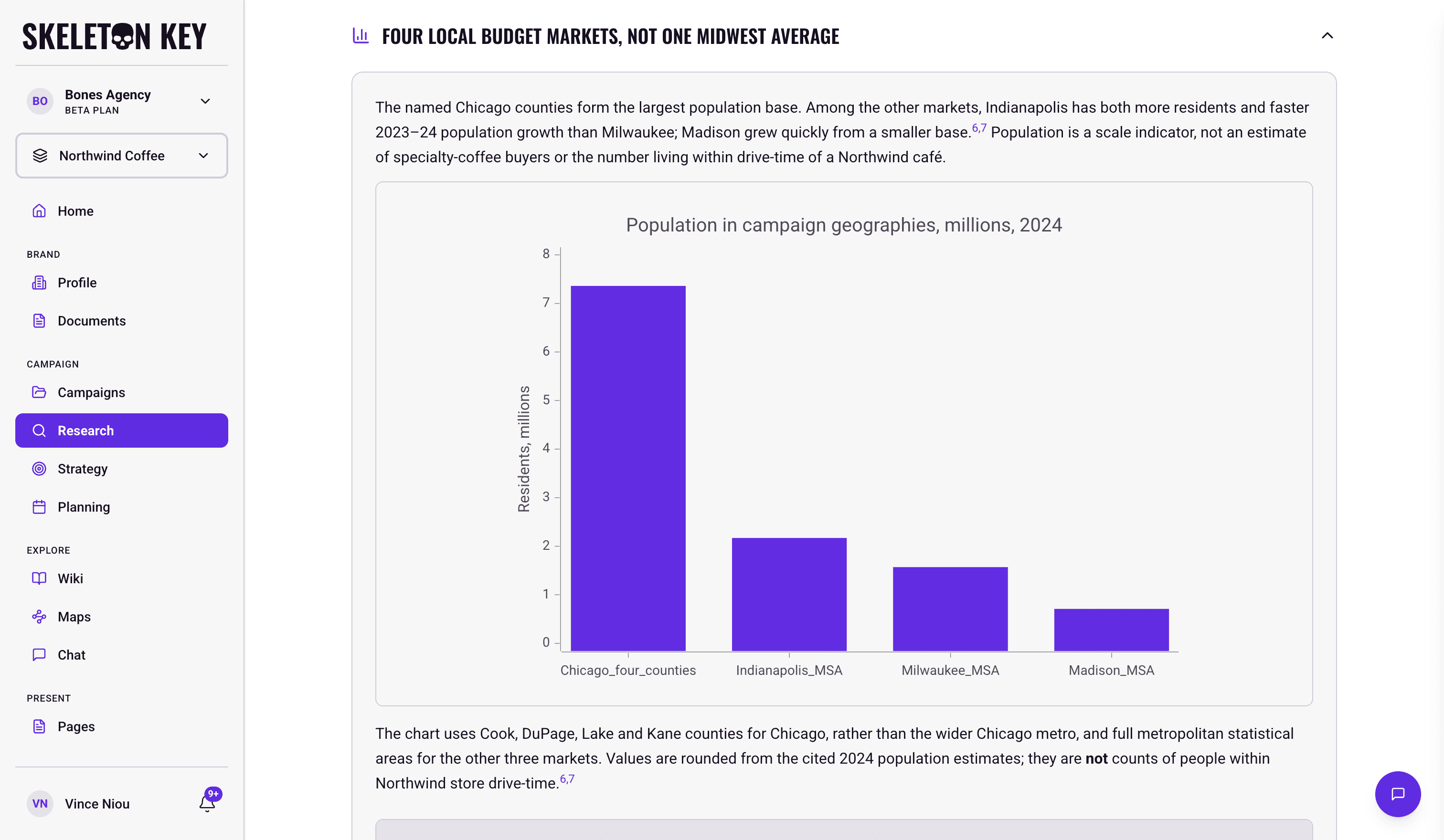
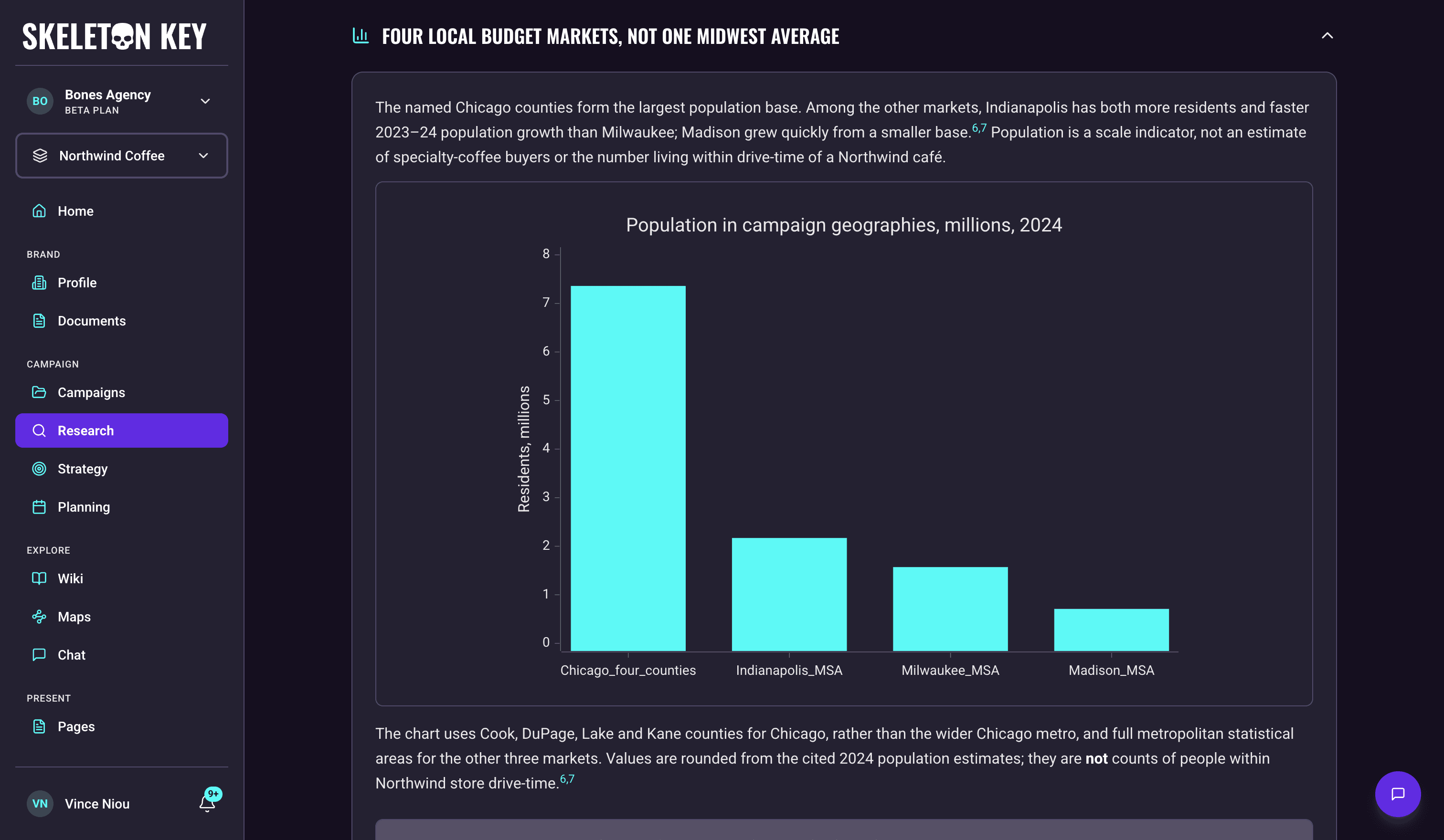
The analyst answers one question: what market are you playing in, and how does it behave? It draws on the category's definition and boundaries, its size, growth, and maturity, the catalysts and headwinds moving it, how attractive each market is, how buyers and value are concentrated, and how often people buy and come back. It picks the angles most likely to change a decision for your brand and brief rather than covering every one, and names its sections after what it found. Expect one or two charts, such as a growth line over time or a quadrant that maps category catalysts against your brand's readiness.
Every Category report includes a Market Prioritisation table: one row per market, with columns chosen for your brief (for example size, growth, penetration, customer economics, accessibility, or whitespace) and a written read on which markets matter most. Name several places in the brief and each one is covered, in its own row or grouped with others that should share a budget. Name a broad region and the analyst may split it into up to three markets when that sharpens the strategy, or keep it as one. The rows become the campaign's market set: Strategy and the Media Plan treat each row as one budget line.
Citations come from market research reports, industry analyses, government data, and any documents you've attached. The closing Risks & Evidence Gaps section flags the most material figures the analyst derived rather than sourced, along with evidence gaps and risks.
Where to find it
Inside a brand or campaign, navigate to Research. After the Research run completes, the Category Analyst output appears as the first of five analyst tabs on the Research page.
How it works
When you start a Research run, all five analysts run in parallel. The Category Analyst reads the brand profile, the campaign brief if you're running campaign-scoped Research, and any documents you've attached. It works from the evidence the search step gathered for the category and runs its own web searches to fill any gaps. Category market data tends to be well-documented in published reports, so the analyst has dense, structured source material to work from.
A Research run takes about 5-7 minutes. All five analysts run at once, so there is no separate time for each analyst.
What you can adjust
Document attachment: Before starting a Research run, you can select documents from the Documents page (PDFs, Word files, Markdown, CSVs, Excel sheets) to attach as context. The analyst treats attached documents as high-priority input alongside web research. This is where prior market studies, custom sizing models, or internal reports can directly shape the output.
Refine: Use the Refine button after a run to submit feedback. Refining Category re-runs only this analyst. The other four carry forward unchanged. Prior versions stay in history. See Refine.
Limits and considerations
- Data sparsity for niche categories. Market size and growth (CAGR) figures are well-documented for established consumer markets. For niche B2B verticals or emerging categories, published data is thin, and the analyst will note where figures are estimates rather than directly cited. Prior market studies or internal sizing models attached from the Documents page are the most effective backfill.
- English-first source bias. Web research draws primarily from English-language sources, which can underweight non-Western markets in the sizing and trends sections.
- Quantitative slant. The Category Analyst prioritizes market structure and economic forces. For lifestyle, identity, or values-driven framings of the category, the Culture Analyst is the right complement.
- Beta software. Outputs are strong but not infallible. Validate cited numbers before briefing teams or committing budgets.
Last updated: 2026-11-02